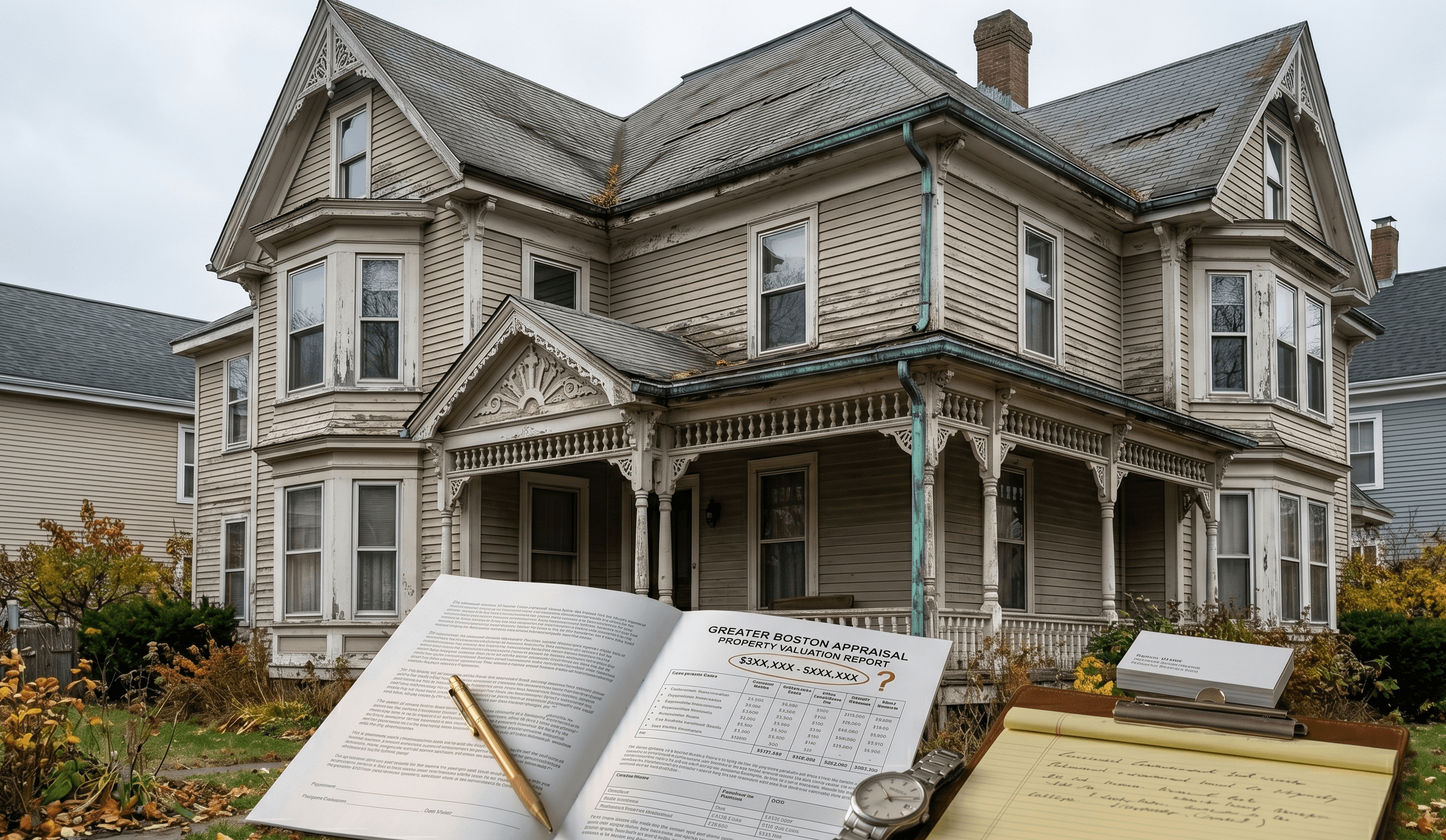

Mass appraisal works reasonably well for common property types in neighborhoods with abundant, recent comparable sales. It works poorly for properties that differ significantly from their neighbors, and Greater Boston's housing stock is full of them. Victorian mansions. Converted triple-deckers. Historic properties on conservation land. Custom contemporary homes in traditional neighborhoods. These properties are consistently at greater risk of over-assessment, not because the assessor is acting in bad faith, but because the mass appraisal model is structurally unsuited to value them correctly.
The Greater Boston pattern reflects a broader problem with mass appraisal systems why tax assessors frequently overvalue unique and non-standard homes across Massachusetts explains the specific mechanisms that produce inflated assessments on one-of-a-kind properties.
How Mass Appraisal Handles Unique Properties and Where It Fails
Mass appraisal models work by identifying properties with similar characteristics, such as size, age, location, and condition, and applying market-derived parameters to estimate value. For a three-bedroom colonial in a neighborhood of three-bedroom colonials, this works well. For a Victorian mansion with original architectural details, custom millwork, a carriage house, and no recent comparable sales within a mile, the model extrapolates from dissimilar properties and applies broad parameters that may not reflect how buyers actually value the specific features of this property.
The result is typically an assessment that is either too high because the model overweights gross living area and ignores functional obsolescence or condition issues that would limit what a buyer would actually pay, or too low because the model cannot account for the premium that sophisticated buyers pay for irreplaceable historic features.
The properties I most frequently appeal on behalf of homeowners are not ordinary colonials or modest ranches. They are the distinctive, one-of-a-kind homes in Greater Boston that the mass appraisal model simply cannot value correctly. The model was not designed for them. And the homeowners who own them pay the price.
The source of many overassessments on unique homes is a specific document the assessment field card errors that drive inflated tax bills on unique properties include incorrect construction quality ratings, wrong room counts, and living area that does not match actual measurements.
Deferred Maintenance and Condition Issues the Assessor Never Saw
The assessor's physical inspection of your property, the one that produced the condition rating on your field card, may have occurred years or even decades ago. Since then, your home may have developed significant deferred maintenance: an aging roof, a failing HVAC system, foundation issues, or other structural or mechanical problems that a buyer would discount significantly.
Mass appraisal models use condition ratings to adjust assessed values, but those ratings are static data points entered at the time of the last inspection and rarely updated unless the homeowner applies for a building permit. A property with significant deferred maintenance that the assessor has never seen and that is therefore rated higher than it deserves may be assessed materially above its actual market value.
The Neighborhood Market Premium vs. Individual Property Reality
When a neighborhood becomes more desirable through improved schools, commercial development, transit improvements, or a simple demographic shift, assessors update valuations to reflect the neighborhood premium. But the neighborhood premium that drives up prices for renovated, well-maintained properties in a gentrifying area may not apply equally to every property on the block.
The unrenovated home next to the renovated one may carry a similar neighborhood assessment uplift but will sell at a significant discount to its neighbors. The mass appraisal model may not fully recognize this individual property reality, producing an assessment that reflects where the neighborhood is going rather than where this specific property stands.
Why Construction Expertise Makes the Appeal More Defensible
A tax appeal appraisal for a unique or complex property requires more than comparable sales analysis. It requires an appraiser who can physically evaluate the property's condition, quantify the cost impact of deferred maintenance, identify functional obsolescence that limits market value, and document the specific features and the absence of specific features that distinguish this property from the comparables the assessor used.
My background as a licensed construction supervisor and award-winning design-build contractor means I see these properties with a precision that general appraisers cannot match. In a tax appeal, that depth of analysis produces a more credible, more defensible report and a better outcome.
For owners of unique Greater Boston properties with inflated assessments, the formal remedy is available, how to formally challenge an unfair property tax assessment in Massachusetts is the step-by-step process from abatement filing to the Appellate Tax Board.
Ready to Get Started?
Whether you received an assessment notice that seems too high, suspect your property has been incorrectly measured, or want to ensure you are not overpaying taxes year after year, Adam Wiener and the Aladdin Appraisal team provide professional, USPAP-compliant tax appeal appraisals across Greater Boston that the Appellate Tax Board accepts as expert evidence.
Phone: (617) 517-3711
Email: info@aladdinappraisal.com
Web: www.aladdinappraisal.com