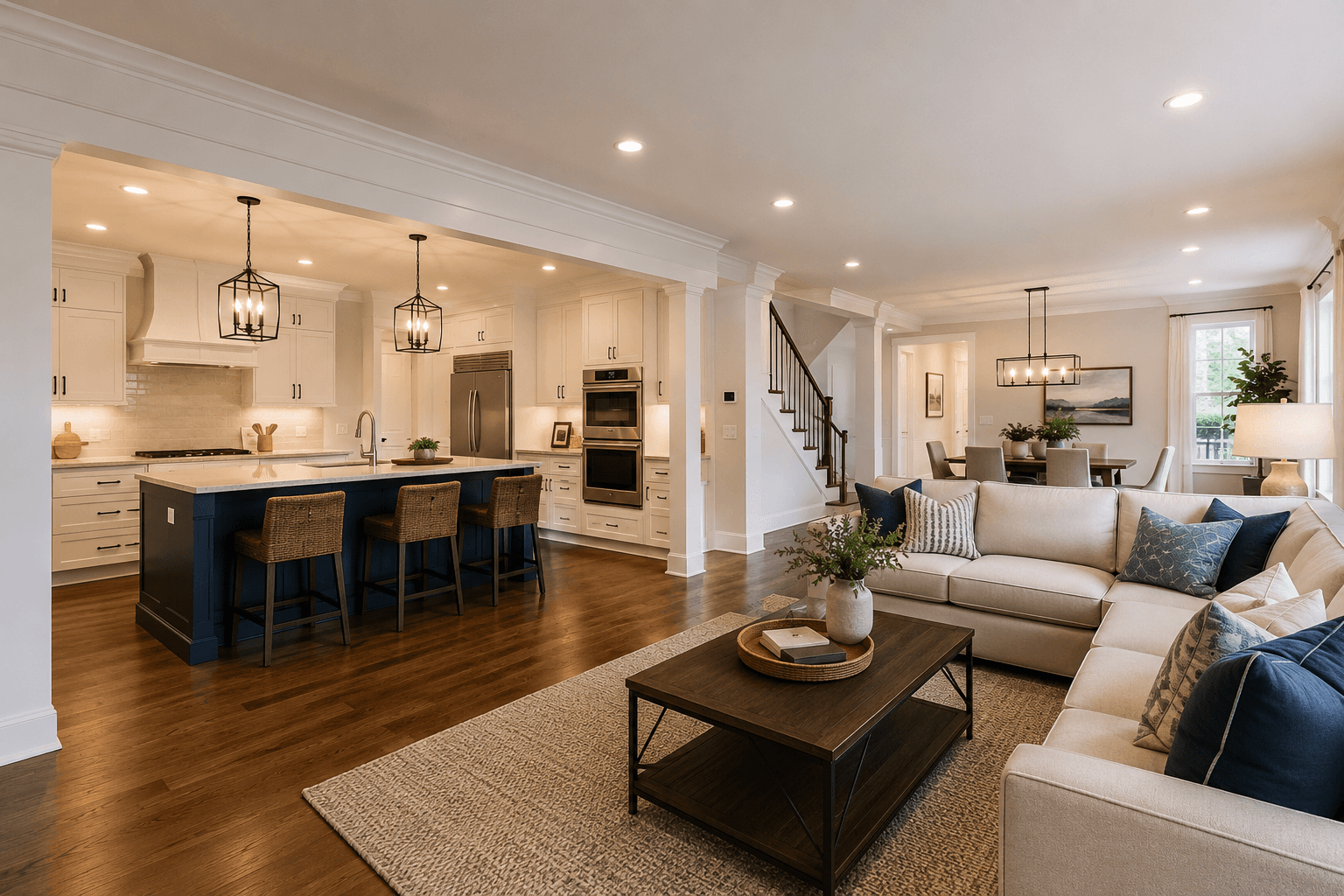

You spent months planning and executing the renovation. The contractor is done. The permits are closed. The space looks beautiful. But one important step remains that most homeowners skip: getting the home professionally remeasured.
A renovation that changes the home's footprint, finishes previously unfinished space, or modifies existing rooms changes the property's gross living area in ways that public records, assessor files, and previous appraisals may not accurately reflect. That discrepancy creates problems that surface at the worst possible times.
What Types of Renovations Change GLA
Not every renovation changes the gross living area. A kitchen upgrade that replaces finishes and appliances without changing square footage does not affect the GLA calculation. But the following renovation types do: additions that extend the building footprint; conversions of attached garages to living space; finishing attic space that meets the ceiling height and access criteria for GLA inclusion; and finishing basement space that is at or above grade, but only if it meets specific ANSI criteria for above-grade living area.
Understanding which renovation type you completed is the first step in knowing whether remeasurement is necessary. If you are uncertain, the answer is almost always: commission a professional measurement and establish the accurate record.
The Finished Basement Problem
The most common post-renovation measurement confusion involves finished basements. Many homeowners who have finished their basements believe, reasonably, that the finished space has been added to their home's square footage. In many cases, this is incorrect.
Under ANSI Z765 standards, the measurement standard that applies to all Fannie Mae-conforming appraisals and that most professional appraisers use for all residential work, below-grade space does not qualify as above-grade gross living area, regardless of how finished or functional it is. A fully finished walkout basement may qualify as below-grade finished area (which still adds value) but does not add to the GLA figure used in the primary appraisal calculation.
Why the Discrepancy Matters at Transaction Time
The problems created by inaccurate post-renovation square footage surface reliably at transaction time, when the property is being sold, refinanced, or used as collateral. The lender's appraiser measures the property using ANSI standards and produces a GLA figure. If that figure differs significantly from what the homeowner assumed, or from what the assessor's records show, the lender's appraisal creates unexpected results.
A homeowner who spent $120,000 finishing an attic addition and assumed 700 square feet of GLA were added, but whose attic does not quite meet the ceiling height criteria, may have a $0 GLA addition in the ANSI-compliant appraisal. The renovation added real value in the market, but the value-add is reflected differently than the homeowner expected.
The Professional Remeasurement as Risk Prevention
A professional ANSI-compliant measurement commissioned after a significant renovation establishes the accurate GLA record for every transaction, tax assessment, and financial purpose that follows. It costs far less than the confusion created by a discrepancy discovered during a sale or refinance. And it gives the homeowner accurate information for planning, including accurate insurance replacement cost calculations that reflect the actual square footage.
Ready to Get Started?
Whether you are a homeowner, estate attorney, realtor, or investor in Greater Boston, Adam Wiener and the Aladdin Appraisal team deliver USPAP-compliant appraisals you can rely on. Call today: (617) 517-3711 | info@aladdinappraisal.com | aladdinappraisal.com


