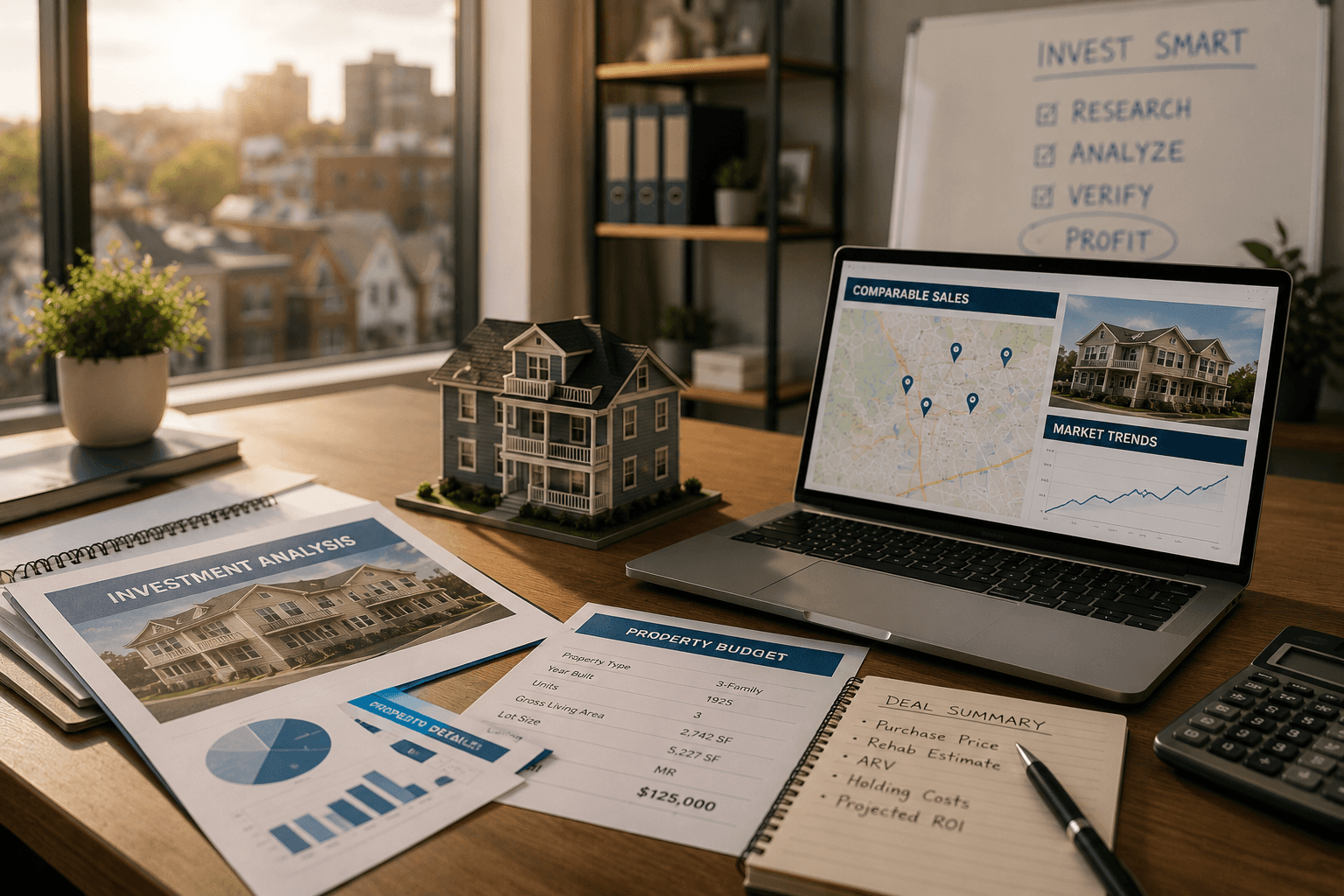

Real estate investors make decisions based on numbers. The quality of those decisions is determined by the quality of the numbers they use. And in Greater Boston, where deal margins are tight and property complexity is high, the difference between an investor-commissioned professional appraisal and an automated valuation model can be the difference between a profitable acquisition and an expensive mistake.
Why Investor Appraisals Are Different From Lender Appraisals
A lender orders an appraisal to protect itself. The appraisal determines the maximum loan amount the lender will extend on a given property. It is produced under the lender's guidelines, uses the lender's selected appraiser, and is owned by the lender, not the borrower. If you are the investor-borrower, the lender's appraisal is not working for you. It is working for the institution that holds the loan.
An investor-commissioned appraisal works for you. It answers the questions you need answered: What is the property's current as-is market value? What is the as-improved value if renovations are completed? What is the appropriate value for a refinance or disposition? How does this property compare to the market for negotiation purposes?
What AVMs Get Wrong in Investment Decisions
Automated valuation models, Zillow, Redfin estimates, bank-produced AVMs, are statistical tools built on regression models and publicly available sales data. They work reasonably well for standard, frequently-transacted properties in data-rich neighborhoods. They fail in specific, predictable ways for properties investors actually target.
Mixed-use properties, two-to-four family homes, properties with significant deferred maintenance, non-conforming lots, and properties with condition issues or unpermitted work all produce AVM estimates with documented accuracy problems. An investor making an acquisition decision based on a Zestimate for a three-family in need of renovation is making a decision based on a tool designed for a different purpose.
The Due Diligence Appraisal
A professional appraisal commissioned as part of acquisition due diligence gives the investor independent verification of the purchase price before committing. If the appraisal confirms the market value at or above the purchase price, the investor proceeds with confidence. If the appraisal identifies a significant gap between the agreed price and the documented market value, the investor has professional evidence to support a price renegotiation or a decision to walk away.
The cost of a professional appraisal in Greater Boston is a fraction of one percent of the typical transaction value. The cost of acquiring a property at a price above its documented market value is a function of every subsequent transaction, refinance, disposition, or equity analysis, for as long as the investor holds the asset.
Ready to Get Started?
Whether you are a homeowner, estate attorney, realtor, or investor in Greater Boston, Adam Wiener and the Aladdin Appraisal team deliver USPAP-compliant appraisals you can rely on. Call today: (617) 517-3711 | info@aladdinappraisal.com | aladdinappraisal.com


