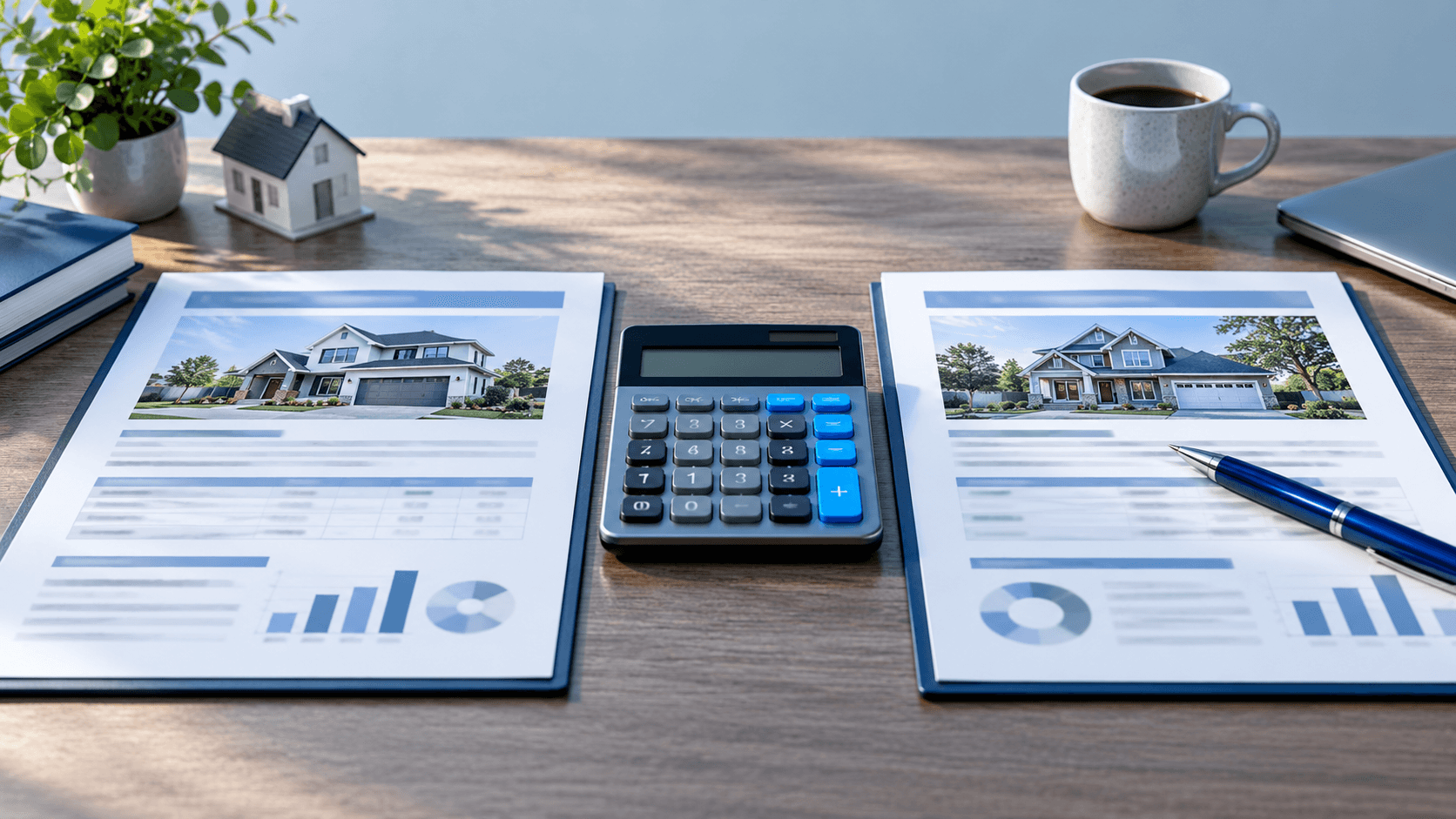

Square footage is the single most cited data point in residential real estate. It drives price-per-square-foot comparisons, listing decisions, appraisal adjustments, lender underwriting, and buyer negotiations. It appears on tax records, MLS listings, and mortgage documents with an authority that suggests precision. The problem is that this number, on which everything else is built, is wrong in a staggering percentage of properties. And in Greater Boston, where homes are old, complex, and frequently modified, the error rate is higher than most professionals want to acknowledge.
Where Wrong Square Footage Comes From
The square footage listed on most MLS profiles originated somewhere in a chain of custody that has nothing to do with professional measurement. It may have come from the original builder's floor plan filed with the town decades ago, before an addition or renovation changed the footprint. It may have come from the municipal tax assessor's records, calculated using exterior measurements taken from a public road, without access to the interior. Most commonly, it was simply copied from the prior MLS listing, which was copied from the one before it.
In Greater Boston's housing stock, which includes Victorian-era homes with complex rooflines, triple-deckers with layered renovations, converted carriage houses, and colonials with basement bedrooms that do or don't count depending on who measured, the margin for error in a copied number is enormous.
I have measured properties in Newton, Brookline, and Wellesley where the listed square footage was off by 300, 400, or even 600 square feet. On a $900,000 home priced at $600 per square foot, 300 square feet represents $180,000 in perceived value. That is not a rounding error. That is a different transaction.
The Three Sources And Why None of Them Are Reliable Alone
Tax assessor records are calculated for the purpose of taxation, not market valuation. They often lag actual improvements by years, use exterior-only measurement methodology, and apply their own definitions of what counts as a living area that may not align with ANSI Z765 standards or Fannie Mae requirements.
Builder floor plans often included in original permits represent what was planned, not necessarily what was built. Site changes, buyer customizations, and field adjustments during construction frequently result in an as-built footprint that differs from the approved plan. The permitted plan may still be the only document on file.
Why Professional Measurement Is the Only Reliable Answer
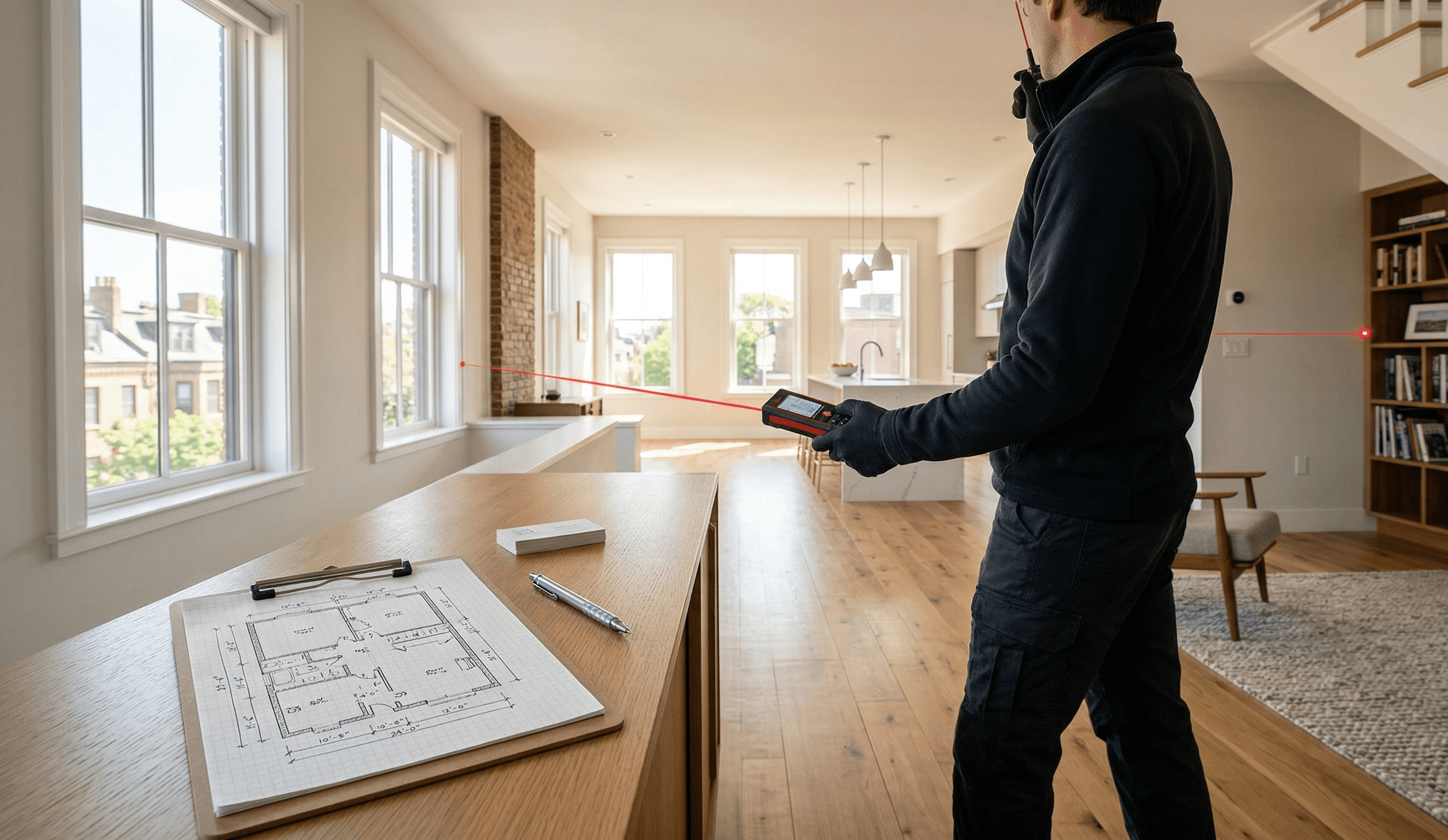
A professional floor plan measurement conducted by a certified appraiser using ANSI Z765 standards involves physical inspection of every room, laser measurement tools verified against manual checks, ceiling height verification for GLA inclusion, and a computer-generated sketch that documents every dimension with enough precision to reproduce the calculation independently.
This is not a technology exercise; it is a professional judgment exercise. Determining whether a finished basement qualifies as GLA, how to handle a sloped ceiling in an attic room, or how to treat a bonus space above the garage requires both knowledge of ANSI standards and the experience to apply them correctly to real properties.
What a Correct Number Protects Against
For sellers: an accurate square footage number prevents the transaction disruption that occurs when the buyer's lender commissions an appraisal and the appraiser measures independently, arriving at a different number than the listing. For buyers, it prevents overpaying on a price-per-square-foot basis for footage that doesn't exist. For real estate agents, it prevents the liability exposure that comes from advertising a square footage figure that proves inaccurate. For the broader market, it prevents the cascading error that occurs when inaccurate comparable sales distort appraisals for years.
Ready to Get Started?
Whether you are a homeowner, real estate professional, interior designer, or investor, the Aladdin Appraisal team delivers professional, ANSI-compliant floor plan measurements and property sketches you can rely on for any purpose.
Phone: (617) 517-3711
Email: info@aladdinappraisal.com
Web: www.aladdinappraisal.com