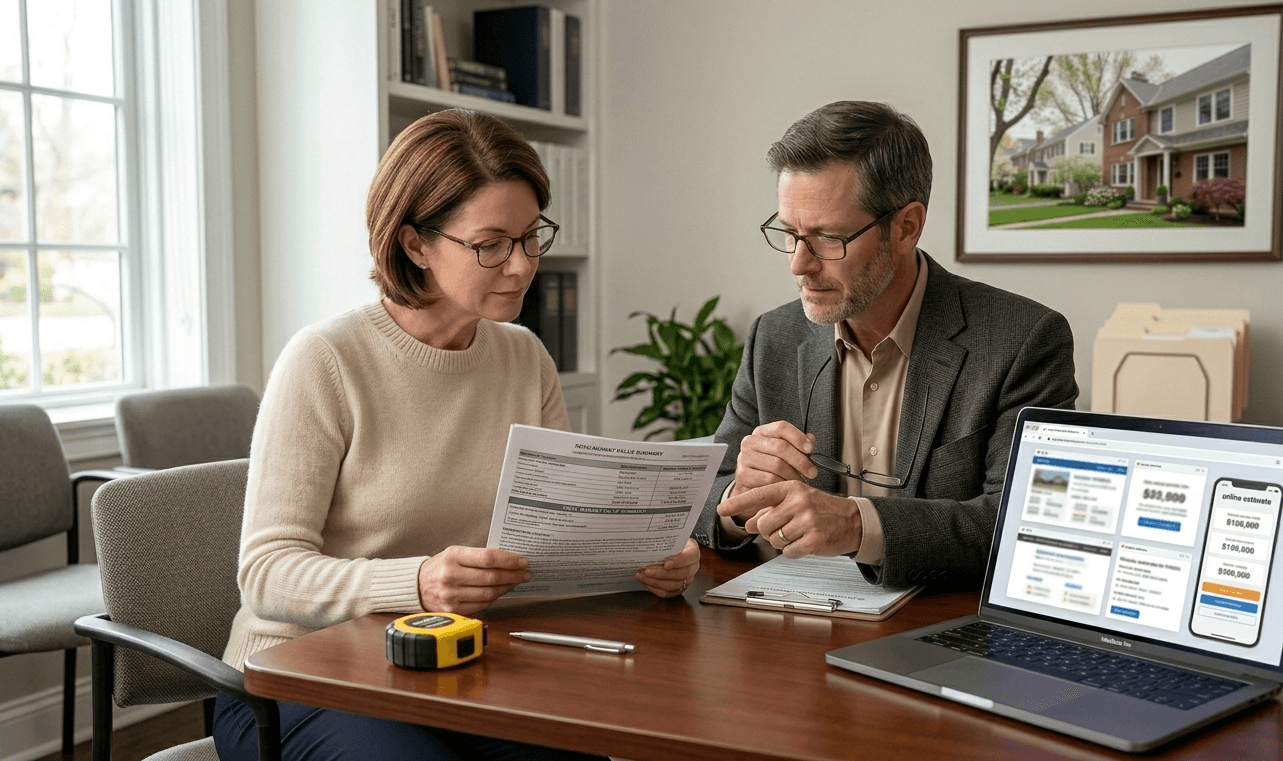

In real estate, almost every big decision starts with the same quiet question:
“Are we sure?”
Are we sure this is a fair buyout in a divorce?
Are we sure the estate is being divided fairly?
Are we sure we’re not underpricing this listing?
Are we sure we’re not overpaying in a bidding war?
Online estimates, tax assessments, and casual opinions can give a quick answer. But when real money, family relationships, or legal outcomes are on the line, “quick” is not the same as accurate.
Everybody deserves to have accurate, unbiased information in their hands before making a major real estate decision. That is exactly where a careful, independent real estate appraisal becomes the difference between guessing and knowing.
The independence is part of what makes accurate information possible, why independent appraisers serve clients better than lender-assigned appraisers is the structural reason behind every service we offer.
We explored this idea in a dedicated piece: how a better appraisal leads to a better decision in every situation, whether the decision is about selling, settling, or planning for what comes next.
The Problem: Lots of Numbers, Not a Lot of Clarity
Today, property owners and professionals are drowning in numbers:
Automated “What’s my home worth?” tools
Property tax assessments
Lender-generated values and appraisal waivers
CMAs and pricing opinions
Stories about what a neighbor’s house sold for
Each of these has a purpose, but none of them are designed to answer your specific question in your specific situation.
Relying on loose or incomplete information can lead to:
Settlements that are not truly fair
Estates that are unintentionally unbalanced
Listings that sit or sell for less than they should
Buyers who stretch too far based on emotion, not data
When the stakes are high, “ballpark” is not good enough.
What Accurate Information Really Means in Real Estate
In residential real estate, accurate information usually means a professional, independent appraisal that is:
Objective – not influenced by who “wants” a higher or lower number
Purpose-built – tied to the exact legal or financial question at hand
Time-specific – based on the correct effective date (today, date of death, date of separation, etc.)
Well-supported – grounded in actual market data, not just software or rules of thumb
Understandable – explained clearly enough that clients and professionals can use it
Who Needs Accurate Real Estate Information Most?
Accurate information is important for everyone, but there are moments where it is absolutely critical.
1. Divorce Attorneys and Their Clients
In divorce, the house is usually the largest asset. Decisions based on rough estimates or outdated assessments can:
Create unfair buyouts
Fuel resentment and conflict
Lead to future challenges if one party feels misled
A neutral, well-documented divorce appraisal gives both sides and their attorneys a shared, credible starting point for negotiation or court.
2. Estate Executors, Trustees, and Heirs
Estates bring together legal requirements, taxes, and family dynamics. Without accurate values:
Tax filings may be questioned
Heirs may not feel they were treated fairly
Disputes can linger for years
A professional estate or date-of-death appraisal provides a clear record of value at the relevant date, so executors and attorneys can do their work with confidence.
3. Homeowners Preparing to Sell or Stay
For homeowners deciding whether to:
List now or wait
Downsize or hold
Stay in place or buy out another party
…an accurate pre-listing or decision-support appraisal can reveal what the property is actually worth in the current market. That information helps set realistic expectations and guides timing and strategy.
4. Buyers and Their Advisors
In a competitive market, buyers can be pulled toward higher and higher offers. Without solid valuation, it is easy to:
Overpay by a wide margin
Take on more risk than intended
Assume that if the lender approves the loan, the price must be reasonable
An independent pre-purchase appraisal or value check gives buyers and their advisors a clearer picture before committing.
(Legal and tax decisions should always be made with an attorney or CPA. Accurate appraisal work simply gives those professionals a sound base to work from.)
How a Good Appraisal Puts Accurate Information in Your Hands
Accurate information does not appear by magic. It is the result of a disciplined, step-by-step process.
A high-quality residential appraisal typically includes:
1. Clarifying the Assignment
What is the purpose of the appraisal? (divorce, estate, sale, purchase, tax-related, planning)
What date matters? (current date, date of death, date of separation, or another specific date)
Who will rely on the value, and in what setting (mediation, negotiation, court, tax filing, etc.)?
Getting this right ensures the appraisal answers the actual question being asked.
2. Carefully Inspecting the Property
Accurate information starts with an honest look at the home itself, not just public records or old photos. That includes:
Confirming size and layout through measurement
Evaluating condition and quality with a trained eye
Looking at how renovations and additions were done, not just that they exist
Understanding how buyers are likely to experience the space
Experience in both valuation and construction helps separate cosmetic touches from meaningful improvements and gives a realistic sense of how the market will react.
3. Selecting and Analyzing Comparable Sales
Comparable sales are the backbone of most residential appraisals. A careful appraiser will:
Choose sales that truly match the subject in location, style, size, and appeal
Avoid the trap of “close enough” comps pulled by radius alone
Make clear, supportable adjustments for differences
Cross-check value indications, especially when the property is unique or complex
This is where shortcuts quickly erode accuracy. Doing the work properly is what creates information that can stand up under questions or challenges.
4. Explaining the Value in Plain Language
Accurate information must also be understandable. A strong appraisal report:
Describes the property and market in clear terms
Outlines which sales were used and why
Shows how the final value was reached
Identifies relevant strengths, risks, or unusual features
Clients, attorneys, and agents should be able to read the report and say, “This makes sense,” even if the number is higher or lower than expected.
How Accurate Information Changes Real Decisions
When people hold accurate information in their hands, the tone of the conversation changes.
Instead of:
“I feel like this isn’t fair.”
“It doesn’t seem right, but I don’t know why.”
“We just have to hope this works out.”
The discussion becomes:
“Now that we understand what this property is worth, what is the best path forward?”
“Given this value, how should we structure the settlement or estate?”
“With this range in mind, how do we want to price, negotiate, or plan?”
Accurate information does not take away every hard choice. But it reduces the guesswork, lowers the temperature, and gives everyone a clearer path to follow.
Why Modest, Steady Expertise Matters
In high-stakes real estate situations, clients and professionals rarely need a showy personality. They need calm, steady guidance.
Aladdin Appraisal is led by an experienced residential appraiser who:
Holds advanced residential appraisal credentials
Is licensed in residential construction supervision
Has completed thousands of valuations across a wide range of properties
That mix of valuation and construction experience is used quietly, in the background, to help ensure that the information delivered is as accurate and practical as possible. The focus stays on the client’s situation and decisions, not on the appraiser.
Get Accurate Information Before You Make Your Next Move
If you are facing a major decision involving a home or residential property in Eastern Massachusetts, this is the moment to make sure you are working with accurate, independent information, not just rough estimates and guesses.
Here is a simple next step:
Contact Aladdin Appraisal to talk through your situation divorce, estate, sale, purchase, tax-related, or planning.
Get guidance on the type of appraisal that fits your needs and the right effective date.
Use a clear, well-supported valuation to make your next decision with confidence.
Do not build important plans on shaky numbers.
Reach out to Aladdin Appraisal today and put accurate information in your hands before you take your next step.
When you’re ready, we’re here to help.
Call 617-517-3711 or email info@aladdinappraisal.com to schedule your pre-appraisal. A small step now can prevent costly setbacks later; don’t risk leaving money on the table.