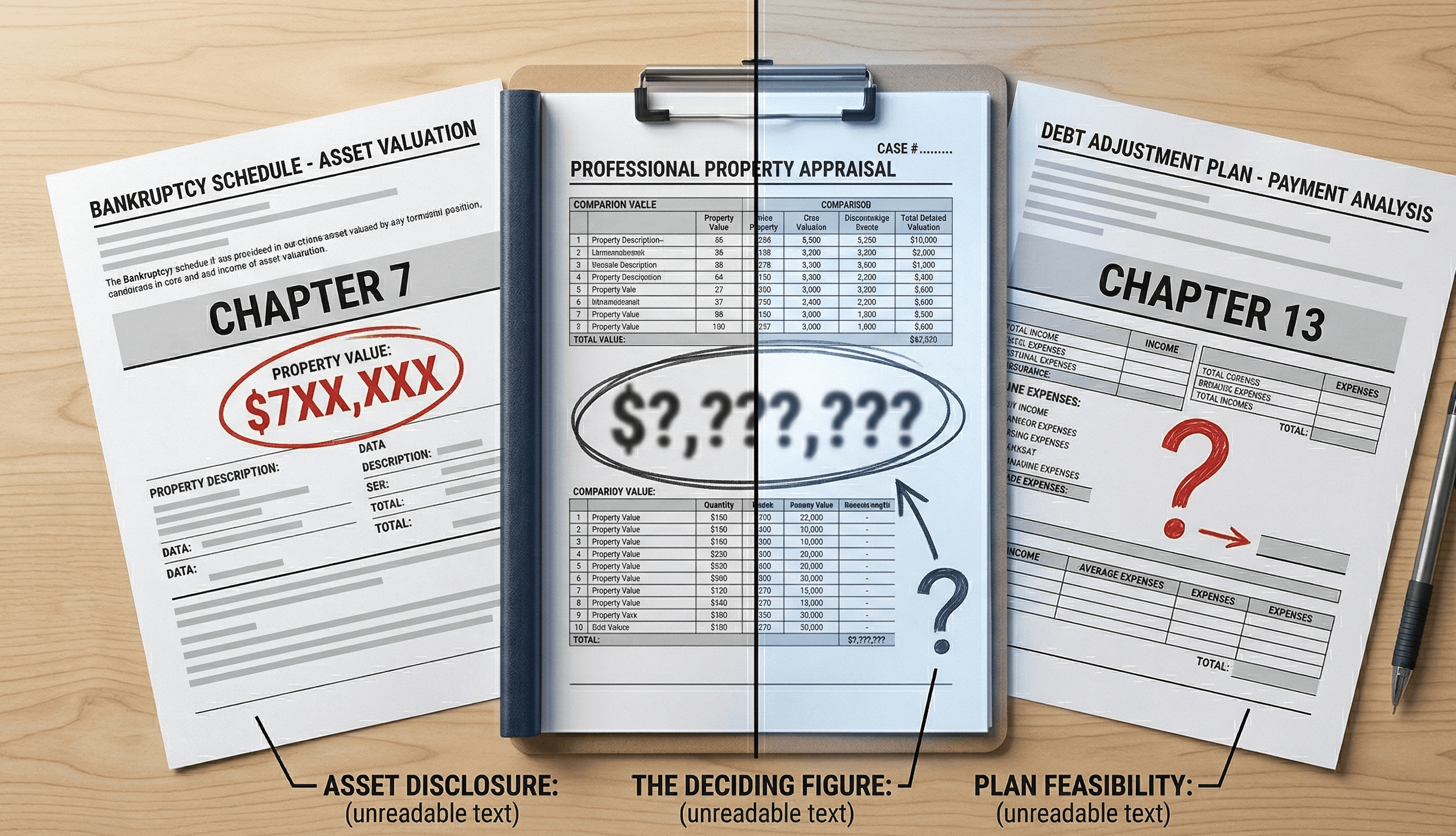

The choice between Chapter 7 and Chapter 13 bankruptcy is one of the most consequential financial decisions a person can make. It affects the timeline of relief, the treatment of debts, the protection of assets, and the financial obligations that follow. What most people and even some advisors don't fully appreciate is how directly that choice is controlled by the appraised value of the primary residence. In Greater Boston's high-equity market, this connection is not theoretical. It is the deciding factor in a large percentage of cases.
The path-determination question this post describes is exactly why the appraisal is the most important document in a bankruptcy filing, a wrong number at this stage can lock a homeowner into the wrong chapter from the start.
Chapter 7: The Liquidation Path and the Equity Question
Chapter 7 bankruptcy liquidation allows most unsecured debts to be discharged in months. But it has a critical gatekeeping mechanism: the means test and the exemption analysis. For homeowners, the critical question is whether the home equity exceeds the available exemptions.
In Massachusetts, a homeowner who has filed a Declaration of Homestead can protect up to $500,000 in equity. Without a Declaration, only $125,000 is protected. For disabled homeowners or those over age 62, up to $1,000,000 in equity is protected under the Massachusetts state exemption. If equity exceeds the applicable exemption, the Chapter 7 trustee can sell the home to pay creditors.
A Greater Boston homeowner with a property valued at $900,000 and a mortgage balance of $450,000 has $450,000 in equity. If they have filed a Declaration of Homestead, $500,000 is protected, and they have more protection than equity. Chapter 7 is available. If they have not filed, only $125,000 is protected, and $325,000 is potentially available to creditors. The appraisal is what makes the math real.
Chapter 13: The Reorganization Path and the Equity Impact
Chapter 13 allows debtors to keep their property while restructuring debts through a three-to-five-year repayment plan. It is the path for homeowners with equity that exceeds exemptions, for those behind on mortgage payments, and for those whose income exceeds the Chapter 7 means test threshold.
In Chapter 13, the appraised value affects the repayment plan critically. Under the 'best interests of creditors' test, creditors must receive at least what they would have recovered in a Chapter 7 liquidation, meaning any non-exempt equity must be paid through the plan. The value also determines whether lien stripping is available.
For homeowners who qualify for Chapter 13, the appraisal unlocks a specific strategy, the lien stripping strategy available in Chapter 13 and why it requires a precise appraisal is one of the most financially significant tools in the entire bankruptcy code.
The Means Test and Greater Boston's Income Reality
Massachusetts bankruptcy law applies a means test to determine Chapter 7 eligibility. In 2025, the median family income for a household of four was approximately $142,000. Debtors with income above this threshold must complete an expense analysis to determine disposable income.
For Greater Boston's professional-class households, dual-income families, healthcare workers, and tech professionals, the means test frequently channels filers into Chapter 13 regardless of their equity position. In these cases, the appraisal's role shifts from equity analysis to plan payment calculation.
Why Getting the Appraisal Before Filing Changes Everything
A professional appraisal obtained before filing provides the factual foundation for the most important strategic decision in the case. It answers: Does the equity exceed the homestead exemption? Is Chapter 7 available without losing the home? Is lien stripping possible? What is the minimum plan payment required in Chapter 13?
These are not questions an attorney should answer based on a Zestimate. They require a professional opinion of fair market value from a certified appraiser with knowledge of the specific property and the local market.
The trustee and the court apply a specific evidentiary standard, why Zillow and tax assessments fail as evidence in bankruptcy court is the same reason they are not accepted in estate filings or divorce proceedings.
Ready to Get Started?
Whether you are a bankruptcy attorney seeking a defensible appraisal for your client's filing, a debtor trying to understand how property value shapes your options, or a trustee requiring independent valuation, the Aladdin Appraisal team provides professional, USPAP-compliant bankruptcy appraisals across Greater Boston that bankruptcy courts accept as credible expert evidence.
Phone: (617) 517-3711
Email: info@aladdinappraisal.com
Web: www.aladdinappraisal.com