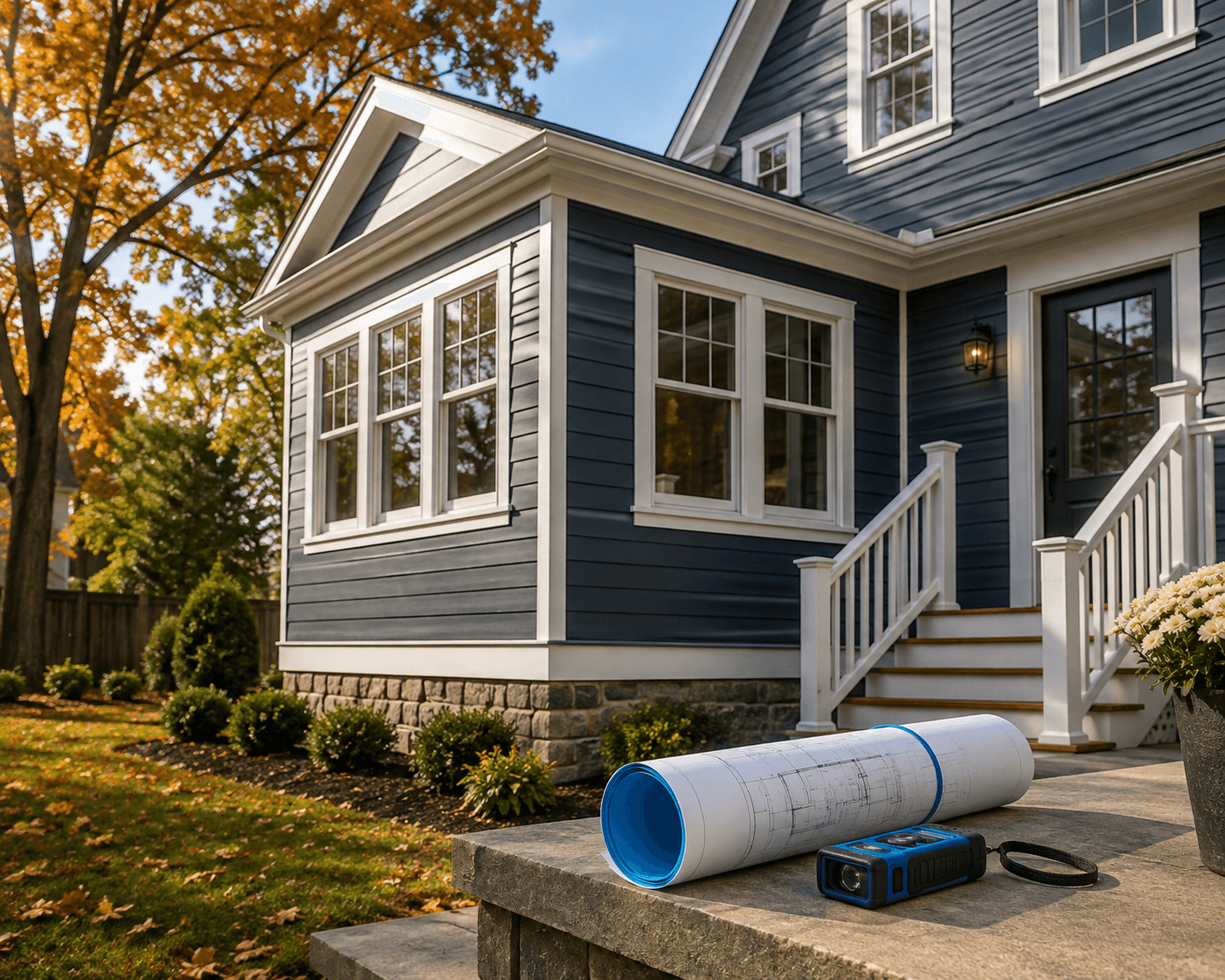
It sounds like it should be simple: measure a house, get its square footage. Yet homeowners regularly encounter three or four different numbers for the same property, from the tax card, the old listing, the builder's plans, and the appraisal, and none of them agree. For years, part of the reason was that there was no single mandatory method. Different people measured differently and all of them were, in their own way, right. The ANSI standard changed that, and understanding what it fixed explains why your numbers may have disagreed in the past.
Why the Numbers Used to Disagree
Before a common standard was widely required, measuring gross living area involved judgment calls that varied from person to person. How do you count a room with a sloped ceiling? Does a finished basement count as living area? What about an enclosed porch, a stairwell, or an area open to below? Reasonable people answered these differently, so two careful measurers could produce genuinely different totals for the same home.
Tax assessors used their own methods, often measuring from records or exterior dimensions. How far the town's figure can drift from a professional measurement is documented in the difference between what town records say and what a home actually measures. Builders quoted plan dimensions that did not match what got built. Agents sometimes repeated whichever number was highest. The result was a house with several official square footages, all in circulation, all slightly wrong for someone's purpose.
What the ANSI Standard Standardized
The ANSI Z765 standard established consistent rules for measuring single-family homes: how to measure, what counts as gross living area, how to handle below-grade space, and the ceiling-height requirements that determine which areas qualify. The full framework and why Fannie Mae made it mandatory is covered in the ANSI Z765 standard that governs how GLA is calculated in Massachusetts property transactions. Fannie Mae made adherence to the standard mandatory for the appraisals it governs, which means the appraiser measuring your home for a mortgage today is following the same rulebook as the appraiser across town.
The point of a standard is not that it is the only conceivable way to measure a house. It is that everyone uses the same way, so the numbers become comparable and disputes disappear.
Why This Protects You
When your appraisal, your listing, and the buyer's lender's appraisal all reflect the ANSI standard, they agree, and a transaction does not blow up over conflicting square footage. When your listing pulls an old tax-card number measured by a different method, it can contradict the buyer's appraisal at the worst moment. The fix is to have your home measured to the ANSI standard before it matters, so the number you rely on is the number every appraiser will confirm. Why doing that before a listing rather than at the buyer's appraisal matters is explained in measure before you list and why the square footage question should be settled in August.
If your property has several square footages floating around, that is a legacy of the old inconsistency. Getting one accurate, standard-compliant measurement replaces the confusion with a number you can actually stand on.
If your Greater Boston property has been renovated, converted, or never professionally measured, our property measurement service delivers an ANSI-compliant GLA that stands up in any transaction.